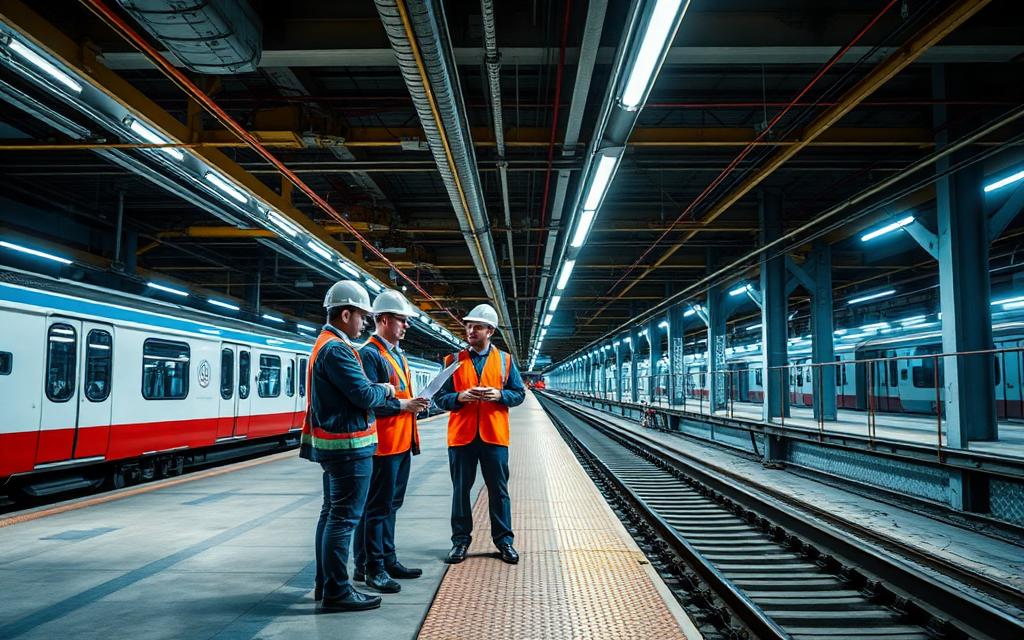
Rail, metro and transit programmes depend on civil works, systems, rolling stock, stations, signalling, testing and operations interfaces. Commercial control depends on managing those interfaces early.
Perspective
Transportation projects, especially rail and metro schemes, are defined by interfaces. Civil works, stations, tunnels, track, signalling, communications, power, rolling stock, testing, operations readiness and safety approvals must converge at the right time. A delay in one interface can cascade across multiple packages.
The challenge is that each package may have its own contract, schedule, reporting method and commercial position. Without integrated interface controls, the project may not see the system-level critical path clearly. A station may be physically ready but not systems-ready. Track may be complete but testing cannot start. Rolling stock may arrive but approvals may lag.
Transportation project administration should include interface control documents, system integration schedules, possession plans, testing and commissioning matrices, access records, authority approvals and change registers. Claims should be assessed in the context of system readiness, not only package completion.
Transportation disputes often arise from system integration pressure. Capital Contracts helps clients structure interface records, programme evidence and claim narratives that reflect how transport projects actually reach operational readiness.
This article is general professional insight and is not legal advice. Contract rights and procedures depend on the governing law, contract wording, project facts, notices, records and dispute forum.
Report incorrect or missing content
Spotted an error, an outdated reference, or missing context? Let us know so we can improve this insight.